Panchakarma Treatment
Detoxify • Rejuvenate • Restore Natural Balance
What is Panchakarma Treatment?
Panchakarma is a traditional Ayurvedic detoxification and rejuvenation therapy designed to cleanse the body, balance the mind, and restore overall health. It focuses on removing accumulated toxins (Ama) and balancing the three vital energies (Doshas: Vata, Pitta, Kapha).
This therapy is described in classical Ayurvedic texts like the Charaka Samhita and Sushruta Samhita, which form the foundation of Ayurvedic medicine.
Not everyone receives all five—treatments are customised.
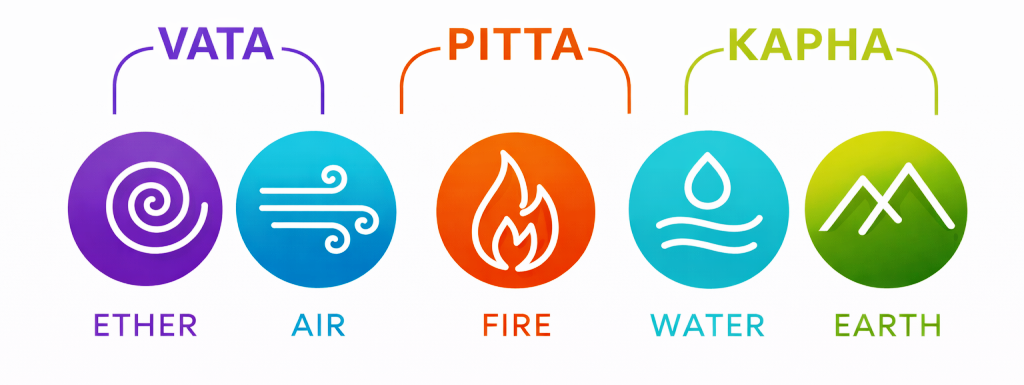
In Ayurveda, the Tridosha theory explains how three fundamental energies govern the body and mind. These three doshas—Vata, Pitta, and Kapha—shape your physical health, mental state, and personality.
Ayurvedic Tridosha
Understanding the imbalance of your unique body is the basis for treatment.
1️⃣ Vata (Air + Space)
Controls: Movement, breathing, circulation, nerve impulses
Qualities: Dry, light, cold, fast, irregular
Balanced Vata
- Creative & energetic
- Good circulation
- Light sleep
Imbalanced Vata
- Anxiety & insomnia
- Dry skin
- Constipation
- Joint pain
Balance Tips
- Warm, oily foods
- Regular routine
- Adequate rest
2️⃣ Pitta (Fire + Water)
Controls: Digestion, metabolism, hormones, bodyheat.
Qualities: Hot, sharp, oily, intense.
Balanced Pitta
- Strong digestion
- Sharp intellect
- Leadership qualities
Imbalanced Pitta
- Anger & irritability
- Acid reflux
- Skin rashes
- Excess sweating
Balance Tips
- Cooling foods
- Avoid spicy/oily meals
- Manage stress
3️⃣ Kapha (Earth + Water)
Controls: Structure, immunity, lubrication, stability.
Qualities: Heavy, slow, cool, smooth.
Balanced Kapha
- Strong immunity
- Calm nature
- Good endurance
Imbalanced Kapha
- Weight gain
- Laziness
- Depression
- Congestion
Balance Tips
- Light, warm foods
- Regular exercise
- Active lifestyle
Purvakarma: Pre-Purification Measures
Before the actual purification begins, there is a need to prepare the body with prescribed methods to encourage it to let go of the toxins. These two procedures are snehan and svedana.
These preparatory procedures help loosen and mobilize accumulated toxins (Ama)
so they can be eliminated effectively during Panchakarma therapy.
The two main procedures are Snehan and Svedana.
What is Snehan?
Snehan (also spelled Snehana) means “to oil” or “to love/nourish.” It involves applying medicated oils or consuming therapeutic fats to prepare the body for deeper cleansing therapies.
It is mainly used before Panchakarma, the classical Ayurvedic detox program.
External Snehan (Bahya Snehana)
Oil applied externally on the body.
- Abhyanga – Full body oil massage
- Shiro Abhyanga – Head massage
- Padabhyanga – Foot massage
Benefits
- Improves circulation
- Reduces stress and anxiety
- Nourishes skin and joints
- Helps with dryness and stiffness
Benefits of Snehan Therapy
- Relieves joint pain and arthritis
- Reduces dryness (especially Vata imbalance)
- Improves sleep quality
- Enhances skin glow
- Supports nervous system health
- Promotes relaxation
Svedana (Swedana) Therapy in Ayurveda
Svedana means “to sweat.” It is a therapeutic sweating or sudation treatment used to open body channels, remove toxins (Ama), and relieve stiffness.
It is usually done after Snehan (oil therapy) and before cleansing treatments in Panchakarma.
It is usually done after Snehan (oil therapy) and before cleansing treatments.
What is Svedana?
Svedana therapy uses heat (steam, warm poultices, or herbal decoctions) to induce sweating.
It helps:
- Dilates channels (Srotas)
- Loosens toxins
- Relieves muscle and joint stiffness
- Reduces pain
Benefits
- Reduces stiffness and heaviness
- Improves circulation
- Relieves cold and congestion
- Detoxifies body
- Enhances flexibility
- Calms Vata and Kapha dosha
Five Basic Shodanas of Panchakarma: Cleansing Methods
It’s important to understand that “pancha karma” actually means “five actions or five treatments.” There are five primary treatments included in Panchakarma which we elaborate on below.
Main Components of Panchakarma
Panchakarma consists of five main purification procedures:
1️⃣ Vamana
Therapeutic vomiting (for Kapha disorders)
- Therapeutic vomiting (for Kapha disorders)
2️⃣ Virechana
Purgation therapy (for Pitta disorders)
- Purgation therapy (for Pitta disorders)
3️⃣ Basti
Medicated enemas (for Vata disorders)
- Medicated enemas (for Vata disorders)
4️⃣ Nasya
Nasal medication (for head and sinus issues)
- Nasal medication (for head and sinus issues)
5️⃣ Raktamokshana
Blood purification (used selectively)
- Blood purification (used selectively)
Vamana (Emesis Therapy) in Ayurveda
Vamana is a therapeutic vomiting procedure used to eliminate excess Kapha dosha from the body.
It is one of the five main detox treatments of Panchakarma.
What is Vamana?
Vamana is a medically induced emesis (vomiting) performed under strict supervision after proper preparation.
It is mainly done to remove:
- Excess mucus
- Toxins (Ama)
- Kapha accumulation from the stomach and respiratory tract
When is Vamana Recommended
- Chronic cough
- Asthma
- Allergies
- Recurrent cold
- Skin diseases (eczema, psoriasis)
- Obesity (Kapha type)
- Hypothyroid conditions (Kapha-related)
Benefits of Vamana
- Clears respiratory tract
- Improves breathing
- Reduces allergies
- Improves digestion
- Clears skin disorders
- Enhances mental clarity
Virechana (Purgation Therapy) in Ayurveda
Virechana is a controlled therapeutic purgation (induced bowel cleansing) used to eliminate excess Pitta dosha from the body.
It is one of the five main detox procedures of Panchakarma.
What is Virechana?
Virechana involves administering herbal laxatives to cleanse toxins (Ama) and excess Pitta from:
- Liver
- Gall bladder
- Small intestine
- Blood
It is considered a gentle yet powerful detox method.
When is Virechana Recommended?
- Skin diseases (eczema, psoriasis, acne)
- Hyperacidity / gastritis
- Liver disorders
- Jaundice
- Chronic headaches (Pitta type)
- Hair fall (Pitta-related)
- Constipation (Pitta imbalance)
Benefits of Virechana
- Clears excess heat from the body
- Improves skin glow
- Enhances digestion
- Detoxifies liver
- Reduces inflammation
- Balances Pitta dosha
Basti (Medicated Enema Therapy) in Ayurveda
Basti is a therapeutic enema treatment and is considered the most important therapy in Panchakarma.
It is especially effective for balancing Vata dosha, which governs movement, nerves, and circulation in the body.
What is Basti?
Basti involves introducing medicated oils, herbal decoctions, or ghee into the rectum under medical supervision.
In Ayurveda, the colon is considered the main seat of Vata, so treating it helps manage many systemic disorders.
Types of Basti
1️⃣ Anuvasana Basti (Oil Enema)
- Uses medicated oil
- Nourishing and lubricating
- Given in smaller quantity
- Mainly for dry Vata conditions
- Good for: Joint pain, dryness, constipation
2️⃣ Niruha / Asthapana Basti (Decoction Enema)
- Uses herbal decoction mixed with oil, honey, and rock salt
- Cleansing type
- Given in larger quantity
- Used for: Detoxification and chronic diseases
3️⃣ Matra Basti
- Small-dose oil enema
- Can be given daily
- Gentle and safe
4️⃣ Yapana Basti
- Combination therapy for nourishment + cleansing
- Used in chronic degenerative disorders
Benefits of Basti
- Best therapy for Vata disorders
- Lubricates joints
- Improves digestion
- Strengthens nervous system
- Delays aging (Rasayana effect)
- Improves reproductive health
What is Nasya?
Nasya therapy helps eliminate excess Kapha and toxins from:
- Head
- Sinuses
- Nose
- Throat
- Brain region
IIt mainly balances Kapha and Vata dosha in the upper body.
Types of Nasya
1️⃣ Navana Nasya
- Medicated oil or ghee drops
- Most commonly practiced
2️⃣ Avapeedana Nasya
- Fresh herbal juice instilled into nose
- Used in sinus congestion
3️⃣ Pradhamana Nasya
- Herbal powder blown into nostrils
- Strong cleansing type
4️⃣ Marsha Nasya
- Larger dose of medicated oil
- Strong therapeutic action
5️⃣ Pratimarsha Nasya
- Mild daily oil drops
- Safe for regular use
Benefits of Nasya
- Clears sinus congestion
- Improves voice clarity
- Enhances memory and concentration
- Strengthens sensory organs
- Reduces headache
- Promotes hair growth
Moksha (Raktamokshana – Bloodletting Therapy) in Ayurveda
Rakta Moksha means “release of blood.” It is a specialized detoxification procedure used to remove vitiated (impure) blood, mainly associated with aggravated Pitta dosha and blood-related disorders.
It is sometimes included as the fifth or an additional therapy within Panchakarma.
What is Rakta Moksha?
Rakta Moksha involves controlled removal of a small quantity of blood to eliminate toxins and reduce inflammation.
According to Ayurveda:
- Blood (Rakta) and Pitta are closely related.
- When Rakta becomes impure, it may cause skin and inflammatory diseases.
Benefits of Rakta Moksha
- Reduces inflammation
- Improves skin health
- Relieves burning sensation
- Detoxifies blood
- Promotes faster healing
Main Panchakarma Benefits
- Eliminate toxins and toxic conditions from your body and mind.
- Restore your constitutional balance, improving health and wellness.
- Strengthen your immune system and become more resistant to illness.
- Reverse the negative effects of stress on your body and mind, thereby slowing the ageing process.
- Bring about deep relaxation and a sense of well-being.